Showing posts with label Herschell Gordon Lewis. Show all posts

Sunday, April 13, 2014

I Don't Feel So Terrible About What I've Done: An Interview With Herschell Gordon Lewis


Things have been so busy around here the past few months, I never got around to posting what should have been the final portion of my "Summer of Blood" coverage of the 50th anniversary of Blood Feast. I spoke to director/producer Herschell Gordon Lewis late last year to discuss the momentous occasion, and portions of that interview appeared in the Winter 2014 edition of VideoScope magazine. Below is a longer version of that interview.

How did you and Dave Friedman get involved with the other Box Office Spectaculars partners, Stan Kohlberg and Sid Reich?

A nasty turn of fortune. Stan Kohlberg owned a bunch of theaters in the Chicago area, some of which were hardtops and some of which were drive-ins. He became much interested in becoming a partner in a production company, because that would give him an opportunity, he felt, to exhibit motion pictures for which he wouldn't have to pay typical film rentals.

That was simply Kohlberg's manner. Sid Reich? I guess you'd call him an industrialist. He owned a company in Rochester, New York, called BernzOmatic that made blowtorches and tools, and he was Kohlberg's partner in the theater business. Sid was a very decent fellow, I felt, and ultimately when [Box Office Spectaculars] ran into a situation which I'll describe to you in a moment, the other three partners sued Stan Kohlberg, and that was the end of Box Office Spectaculars. 

How was Blood Feast financed?

There was almost no financing necessary because Dave Friedman and myself simply put up some money from previous winnings. We'd had, for example, The Adventures of Lucky Pierre, which was a big winner. So we weren't really concerned too much about going in another direction, other than—because it was totally experimental; nobody had ever made a movie of that type before—we wanted to hedge our bets as best we could in case the move was total flop. I will say, on Kohlberg's behalf, he was willing to take a chance, so he came into the deal based on equal partnership. I've got to hand it to everybody involved here, because as you can imagine, if you want to project yourself back in time to that year, the notion of making a movie with the kind of content Blood Feast had could have been suicidal. We could have sat there with that movie, never getting a single play date out of it, except we knew Kohlberg would play it in one of his theaters.

That also was somewhat experimental, because Kohlberg already had a reputation for making it very difficult for a film company to collect film rentals. That was worth the risk, we felt.

What was the appeal of shooting in Florida?

Weather was a major factor if you're from Chicago. Florida is also a right-to-work state. That may not mean much to the typical major film company, but to an independent that doesn't want the IA or Teamsters involved, it's a benefit. There are lots of out-of-work actors in Florida. People want to work here. I came to the conclusion long before I moved to Florida that this was a very good place to make movies. 

What can you tell me about Alison Louise Downe, who is credited as the screenwriter on a number of your films, including Blood Feast?

She was part of our team. We just named her as the screenwriter. When someone asks, "Who wrote the script for Blood Feast?", my standard answer has been, "What script?" We literally made that up as we went along. Later on, she became very difficult to work with and we parted company, but she always claimed she wrote the script for that and for She Devils on Wheels. She was simply part of the group. We assigned credits, sometimes we made up names. 

Beyond Kohlberg's theaters, what was the plan to get the film distributed?

One benefit we brought to this mix was we had already established a minor reputation of making movies that the theaters could make money on. That came from our lowered demand for film rentals from a play date. 

Let me explain that. A major film company would come into a theater and say, "Here's our deal. We get 80 percent the first two weeks, 60 percent the next two weeks, and from then on it's 50/50." We'd come in with our piece of crap, and we'd say, "Guarantee us one week at 35 percent. If you want to hold it over a second week, same deal, 35 percent." A theater owner could say to himself, "I can play to a half-empty house and make more money," which is of course what the nature of the business is. It's the film business. It's not a fundraiser. They could make more money with us, and they would take a chance because we knew how to put a campaign together.

I've always felt, even up to today, the campaign is just as important as what's on the screen. We weren't too concerned since the investment was so minimal in Blood Feast. What could we lose? I grant you, when I was cutting that thing in my little cutting room in Chicago, people would see this beat-up work print with grease pencil marks all over it and ask me, "Is this a medical film?" So I did have second thoughts about it. 

We opened that movie, as you know, in one of Kohlberg's theaters, the Bellevue Drive-In in Peoria, figuring if we died in Peoria, who would know or care?


I found an article that indicated Scum of the Earth played at that theater as well.

I think that's true. I think Scum of the Earth was  transitional picture. Scum of the Earth was the last black-and-white picture I ever made. I'll call it a transitional picture, because it wasn't in line with what we had been making. I didn't want to make any  more of the pictures we'd been making. I felt that particular industry was going in a rather strange direction and I didn't want to be a part of it.

There was a lot of controversy around Blood Feast's release. Some newspapers refused to run the ads. How did you work around these issues while you were trying to market the film?

We reveled in it! As I remember, the Louisville Courier-Journal decided not to run any ads for a motion picture with the word "blood" in the title. There was a major company movie, I've forgotten the title, that was caught like a dolphin in a tuna net because the policy was aimed at us, but everybody else paid the penalty. It was truly beneficial, and the more attacks we had, the better off we were. 

The movie was chopped to bits. We never knew what we were going to get back when a print came back to us, having shown at a place where the public outrage had led to somebody taking a scene out. It was inevitable, and we anticipated that. We knew that we were plowing new soil there. 


There was an injunction taken out against the film in Sarasota, Fla.—by Dave Friedman himself, in an effort to drum up publicity.

Yes, that was Dave. There was only one of him. He was the ultimate showman. I recall, we were shooting somewhere in a very posh neighborhood in Miami, and they sent a policeman out, and Dave got the policeman to take a bit part in the movie. That little anecdote is true. We initiated much of the controversy surrounding the movie. What are you going to do with a movie that cost nothing to make, had a cast of nobodies, and primitive effects? You go for showmanship. That's what we did. History has justified it, I think. That may be too liberal a verb. We literally initiated a new genre of motion pictures. That's not easy to do when you have no budget.


Friday, August 30, 2013

Bloody Parting of the Ways

By the summer of 1964, with both Blood Feast and Two Thousand Maniacs still in theaters, the partnership between H.G. Lewis, David Friedman and exhibitor Stanford Kohlberg had soured. Box Office Spectaculars dissolved amid acrimony and lawsuits. By the end of that year, Friedman had cut ties with Lewis and headed to California and Lewis was distributing Moonshine Mountain.

This Aug. 4, 1964, Variety article covered the split:

Gore Film Trio Bust Own Guts On Cut of Coin

A Chicago court suit filed against his partners in a production company by producer Herschell Lewis has broken up what is probably the most successful team making low-budget nudie, gore and action films.

Lewis is suing his former partners, David F. Friedman and Stanford Kohlberg for an accounting and distribution of profits on films already made and for $300,000 for a contract he alleges was made to make 30 more actioners over the next five years.

The trio had jointly produced "B-o-i-n-n-g!", a nudie, and four gore pix -- "Scum of the Earth," "Blood Feast," "2,000 Maniacs" (see separate stories) and "Color Me Blood Red," the latter completely filmed but not yet edited. Lewis and Friedman had previously produced several highly successful nudies.

Friedman is currently working for Kohlberg in the distribution of the films already  made, and Lewis has nearly finished shooting his own comedy-action picture.

Tuesday, August 20, 2013

Blood Feast Ad-O-Rama Part II


Blood Feast continued playing drive-ins and specialty theaters throughout the 1970s (and beyond). Below is a sampling of advertisements for the film's latter-day bookings.


We start things off with this phenomenal quadruple bill from the Elyria Chronicle Telegram, April 16, 1971, where two H.G. Lewis flicks follow George Romero's Night of the Living Dead (Pennsylvania), and what is likely a slightly misspelled listing for Lewis' former partner David Friedman's She Freak (1967). Plus, free gas (likely for your in-car heater)!


Next up, from the October 2, 1973, edition of the Albuquerque Journal, an even bigger Halloween-themed event with three Lewis films, the West Virginia-lensed Teenage Strangler, a bonus Al Adamson biker film, and whoever the heck Nightmare Alice is. Free pass if you stay for the entire show? I'll take that challenge.


This February 2, 1974, advertisement from the Coshocton Tribune (Ohio) is a tad more serious, and opts for some new artwork (probably to keep patrons from realizing they were about to see two ten-year-old films).


Next, Doctor Kiss over at the Classic Horror Film Board posted this ad from the Elgin Cinema in New York from December 1971, which touts Blood Feast as "the worst film ever made," quite a few years before Plan 9 From Outer Space took the title. The Elgin was founded by producer/distributor Ben Barenholtz in 1968, and is credited as the birthplace of the "Midnight Movie" format -- so Blood Feast graced its screens not too long after the theater's sold-out run of El Topo.


Finally, from Fred Adelman's scan collection, comes this New York ad from the 1980s, again touting Blood Feast's "worst film" bona fides, this time presented by Sleazoid Express publisher Bill Landis.


Tuesday, August 6, 2013

Blood Feast Ad-O-Rama


Blood Feast began its official theatrical in the fall of 1963, and continued playing double- and triple-bills (often with other H.G. Lewis films like Two Thousand Maniacs! and Color Me Blood Red) well into the early 1970s. Below is a small sampling of some of the 1960s advertisements heralding the goriest show on earth.

First, here's a November 29, 1963, ad from the Bridgeport Post in Connecticut, mentioning that Blood Feast would be coming the following Tuesday:


From Burlington, N.C., comes this September 17, 1963, ad from the Daily Times News, which indicates the film had already played there once. Blood Feast would continue to show in Burlington off and on for the next 10 years, and local theaters sometimes advertised other films by promoting them as being just as bloody or bloodier than Blood Feast.


Here's a nice ad from the Maryland-based Salisbury Times, from May of 1964, pairing Blood Feast with Bary Mahon's Louisiana zombie film The Dead One.


Here's a strange ad from the Kingsport Times in Tennessee, November 13, 1964, listing the film as Night of Blood Feast. I've found other ads where "feast" was actually a misspelling of the title for the film Night of the Blood Beast. This one appears to be the Lewis film, given that it's paired with Two Thousand Maniacs!.


August 15, 1965, from the Appleton, Wis., Post Crescent News, this time paired with two Del Tenney films from Connecticut.


November 4, 1966, The Elyria Chronicle Telegram in Ohio features the "blood trilogy" in all its gory glory.


Later that December, from the same paper, a less explicit ad for the same triple feature.


This ad from the Jan. 22, 1966 Syracuse Post Standard is more like it. Not sure what Guerilla Girl is, though...


From the Nov. 7, 1969, Zanesville Times Recorder. Here, Blood Feast has been tacked on a Crown-International double feature.


Friday, July 26, 2013

H.G. Lewis on the Small Screen

The very first interview I ever read with H.G. Lewis was in the RE/Search book Incredibly Strange Films. The very first time I ever heard the man speak was on the British TV program "The Incredibly Strange Film Show," which was syndicated in the U.S. on the Discovery Channel cable network. The series served as a fantastic primer for the films of everyone from Fred Olen Ray and Ray Dennis Steckler, to Sam Raimi and Tsui Hark. The Lewis episode briefly covers his entire career (up to that point), and even includes a tour of Miami's Suez Motel, conducted by Blood Feast star William Kerwin.

I've included a clip from that episode below, but you can find the entire episode (in four parts) here.


Wednesday, July 24, 2013

Castle of Frankenstein vs. Blood Feast


 Most of the press coverage Blood Feast received during its initial run focused on its graphic content, dust-ups with local censor boards, and battles over its graphic advertising. There were very few actual reviews of the film that we've been able to turn up. One of the few contemporary reviews from the fan press came via Calvin Beck's erratically published Castle of Frankenstein (issue #6, published in 1964).


The brief review is quoted below, followed by a review of H.G. Lewis' 2,000 Maniacs (in release at the same time), and a related blurb from Joe Dante. (Special thanks to friend of the blog Terry Maher, for making his back issues of CoF available to us.)

Blood Feast -- (58m. -- BoxOffice Spectaculars -- 1964). Color. Thoroughly revolting, inept grade-Z horror garbage. Madman tries to restore life to Egyptian Love Goddess by synthesizing the organs and drippy entrails of pretty girls. You won't believe it until you see it; looks like amateur night at the butcher shop. Strong stomachs only - Yecchh. Connie Mason (of PLAYBOY fame), Thomas Wood, Scott Arnold.

2000 Maniacs -- (84m. -- Box Office Spec. -- 1964). Color. Unbelievable, incredibly sadistic blood-&-guts shocker by producers of "Blood Feast." Modern Southern city, massacred by Northern troops during the Civil War, now takes revenge by mutilating visiting Northerners. Color cameras dwell lovingly on torn limbs, mashed torsos and gory entrails. Vigorously anti-Southern, ineptly made grade-C horror. All the more offensive because film has something to say and has chosen this way to say it. Connie Mason, Thomas Wood.

We'll forgive the reviewer for slightly garbling the plot of 2,000 Maniacs (it's not a modern Southern city; it's a literal ghost town that revives on the anniversary of the slaughter) since they rated it a "grade-C" horror film, an improvement over the "Z" grade handed to Blood Feast. Still, calling the film "anti-Southern" is a mis-reading of both Lewis' intentions and his audience's reaction; 2,000 Maniacs may be the most fully realized neo-Confederate revenge fantasy ever committed to film.

On the very same page where these reviews appeared, Joe Dante contributed a small blurb of text that provides some interesting information re: Blood Feast and the New York-lensed Flesh Eaters:

The National Association of Broadcasters has warned TV stations to beware of the following TV trailers:
BLOOD FEAST: "A tableau of carnage and badness ... brutally staged in Color" which heart patients should beware at all costs, says the NAB.
FLESH EATERS: An announcer says "If you can't stand the sight of flesh being stripped from a human body please leave the room." A scene from the picture follows: an actor whose flesh is burning screams "Something is inside me ... eating its way out!"
One of these films got the full cover-story treatment from one of our "competitors" ... 6 pages plus cover, in fact. Makes you wonder what standards of criticism they have over there.
-- Joe Dante --

Wow -- Blood Feast had a TV trailer? Dante is taking a swipe at issue 29 of Famous Monsters of Filmland, which included lengthy coverage of Flesh Eaters.


Finally, if anyone has come across any other reviews of Blood Feast published during its 1963/1964 run, please send links, copies, or any other material to us at regionalhorrorfilms@yahoo.com.


Wednesday, July 17, 2013

BoxOffice Tackles Blood Feast


Blood Feast finally began its journey into general release at the end of 1963. Here is what the BoxOffice reviewer thought of it:

Blood Feast
Boxoffice Spectaculars, 71 Minutes, Rel. Sept. 1963

With as much "built-in" selling factors as any imaginative showman would desire, this Friedman-Lewis production, listing David F. Friedman as producer and Herschell G. Lewis as both director and photographer, will be remembered for its gory content long after the run-of-the-mill horror efforts have played out their modest boxoffice billings. It may well set a new precedent, a new pace, for this particular genre, as popular as ever, the while serving to introduce playboy Magazine-famed Connie Mason as the gal on whom the eyes of evil -- Mal Arnold, a fanatic devil-cult worshipper -- cast an understandably appreciative glance. Significantly, the story-line -- credited to A. Louise Downe -- doesn't grunt and groan for mere effect; it relates circumstances with a ringing clarity and precision that should delight the most professed fanciers of horror entertainment, and since Friedman-Lewis forces have wisely incorporated color (Eastman) in their budget, the effect is even more memorable. Mal Arnold, as the chap not inclined to overlook killing nubile young girl victims in an orgy of brutal slaughter, is cold bloodedly efficient.

EXPLOITIPS:

Street gag -- complete with flowing cloak, sandwich sign -- is very much in order. Station "doctors" and "nurses" in the lobby opening day, dispensing free "nerve pills."

CATCHLINES:

An Admonition: If you are a parent or guardian of an impressionable adolescent, DOT NOT BRING HIM or PERMIT HIM to see this motion picture!

Monday, July 15, 2013

Friday, June 28, 2013

Summer of Blood: A Look Back at 1963, Part 2

As part of our ongoing celebration of the 50th anniversary of Blood Feast, more blurbs from BoxOffice magazine about regional horror happenings from that seminal summer.


From the June 10, 1963 issue:

Dave Friedman is making a cross-country tour on behalf of "Scum of the Earth" and "Blood Feast," produced by Friedman and Stanford Kohlberg. "Scum of the Earth" had its initial opening at the Bellvue Drive-In, Peoria, with healthy gross.

Chicago producer Bill Rebane has resumed shooting his "Terror at Half Day," science fiction film, starring June Travis Freidlob ...

Note in the Friedman item that Scum of the Earth was previewed at the very same drive-in where Blood Feast would premiere a month later in July 1963.

There were also more updates about the Flamingo production of Miami Rendezvous, which we earlier established was released as Passion Holiday.

From the June 10, 1963 issue:

21 Miamians Play Roles in 'Miami Rendezvous'

MIAMI -- Shooting on the new full-length color film, "Miami Rendezvous," is under way at Crandon Park, with some interiors being made at the Barcelona Hotel on Miami Beach.

Gloria Izzo, who is handling casting and coordination for producers Irwin and Herb Myers of Flamingo Productions, said camera crews were expected to be working here for a couple of weeks.

Girls in bikinis have been flitting about the Barcelona pool area, strippers have been cavorting in the Bravo Room, and men and women dressed in evening wear have been parading before the camera.

The cast is composed mostly of Miamians, and among those "makng the scene" were Peg Rayborn, Sharon Lee, Virginia Horn, Bobbie Shaw, Lanita Kent, Connie Crump, Harold Richter, Ludovic Huot, Owen Negrin, Pearl Rubin, Gertrude Dean, Monroe Myers, Lou Horn, Ed Bell, Sid Katz, Marion Webber, Eva and Charles Bartfield, John Wentz, Frances Glick and Bob Krantz Jr.

From the July 1, 1963 issue:

Nine Movies Are Planned By Flamingo Productions

MIAMI -- Flamingo Productions completed shooting on "Miami Rendezvous" and already is preparing for its next motion picture here.

At least nine movies are in the planning stage by the newly formed company, headed by Herb Meyer, producer, and Irwin Meyer, producer-director. Their next film will be a horror picture with a psychopathic theme.

Gloria Izzo, casting director and production coordinator, announced that casting for the new picture will begin this month and that shooting will be started in mid-July. 

"Miami Rendezvous" is a full-length suspense-adventure feature, with mostly local talent. All scenes were made in the South Florida area.

The producers cite the following conditions as being favorable to the output of low-budget pictures:

"Excellent filming weather 12 months of the year; many expert technicians available, already skilled in their trade, who prefer living in the Miami area; a wide variety of locations within a 100-mile radius, such as dense jungles, barren beaches, unspoiled islands, cattle ranches and horse-breeding farms, modern metropolitan cities, fabulous hotels, Seminole Indians and villages, a huge modern airport complex and Caribbean settings, plus excellent facilities such as studios, sound stages, etc., for processing film."


Monday, May 27, 2013

Trailer of the Week: The Godfather of Gore (2010)


Well-received documentary on H.G. Lewis directed by New York filmmaker/historian Frank Henenlotter.


Wednesday, May 22, 2013

Nothing So Appalling in Toledo


 As part of our ongoing coverage of Blood Feast's 50th anniversary, here's an item from the summer of 1964.


From The Toledo Blade
Wednesday, July 1, 1964

Grisly 'Trailer' Brings Protests, Policy Change

Ray Oviatt, Blade Entertainment Editor

The movie exhibitor's problems, created by the wide suitability range of current films, extends to the previews of coming attractions. This was emphasized by the experience of the Telegraph Drive-In this past week.

While showing a bill, generally acceptable to general audiences, a trailer promoting a grisly item called "The Blood Feast" was run, much to the outrage of numerous patrons who had come in family groups. As a result the Armstrong Circuit, operator of the theater, has canceled the scheduled showing of this reportedly distasteful picture altogether.

Also, according to Fred Lentz of the Armstrong home office in Bowling Green, managers around the circuit have been authorized to delete from their schedules any trailers which might not be in keeping with the current program.

The reasonable complaints which were registered with me were based on the fact that movie-goers had gotten something they had not bargained for. Having purchased tickets for inocuous films such as "Spencer's Mountain" and "The Wheeler Dealers," they had not expected to see gore and sadism.

Callers were not necessarily demanding that the film not be shown at all, only that they be given the opportunity to avoid it and any excerpts from it.


Monday, May 6, 2013

Trailer of the Week: Monster a Go-Go (1965)


Two years in the making! What do you get when Bill Rebane starts a film and Herschell Gordon Lewis finishes it? You get this.

Monday, May 14, 2012

Trailer of the Week: Wizard of Gore (1970)


One of H.G. Lewis' Chicago-lensed oddities, later remade with Crispin Glover. "I am Montag!"


Monday, March 19, 2012

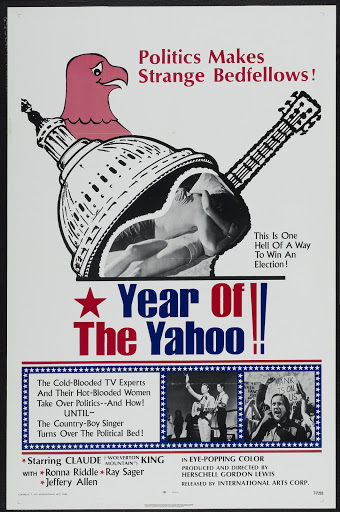
Trailer of the Week: The Year of the Yahoo! (1972)


Not a horror film, but I thought it was appropriate for the primary election season. Here's H.G. Lewis' take on A Face in the Crowd -- The Year of the Yahoo!

Monday, April 25, 2011

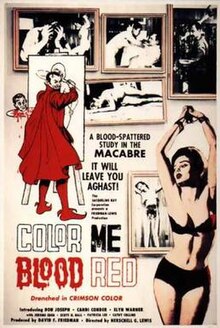
Trailer of the Week: Color Me Blood Red (1965)

The final installment in H.G. Lewis and David Friedman's Blood Trilogy. Keep reminding yourself, it's just a movie...

Monday, April 18, 2011

Trailer of the Week: Two Thousand Maniacs! (1964)


Yee-haw! H.G. Lewis follows up Blood Feast with what he sometimes refers to as "Brigadoon with blood."

Monday, November 29, 2010

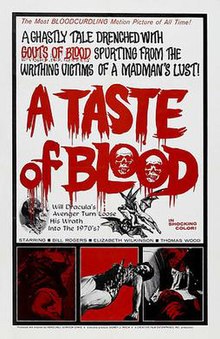
Trailer of the Week: A Taste of Blood (1967)


H.G. Lewis goes high-brow (sort of) by tackling the Dracula mythos in A Taste of Blood.

Friday, June 25, 2010

J'Accuse! Regional Horrors: Special Law & Order Edition


It's true -- low-budget horror film directors are frequently accused of committing crimes against good taste, manners, and cinema in general. A few notable regional filmmakers, however, have committed actual crimes. Here's the quick and dirty Line-Up of the Damned:

Panning for Gold in Baltimore: We've written extensively about former infomercial star Santo Gold (a.k.a. Santo Rigatuso, a.k.a. Bob Harris), the demented mind behind the formerly-lost wrestling film Blood Circus (1985). But we'll repeat ourselves anyway. Rigatuso was eventually convicted of mail fraud in connection with his cheap gold jewelry and credit card authorization business in 1989, and served 10 months in prison. You can read more about it at the Santo Gold Museum. Or get Santo's side of the story here.


Andy Milligan Meets the Army of God: If you've read Jimmy McDonough's fascinating biography The Ghastly One, then you know late director Andy Milligan's life was awash in slightly less-than-legal activities. If you haven't read that book, though, you wouldn't know that one of the actors in the film Carnage (1984) was Dennis Malvasi (a.k.a. Albert Alfano), who later gained some measure of infamy when he and his wife Loretta Marra helped accused murderer James Kopp (who had killed an abortion clinic doctor) escape the country. Malvasi himself was affiliated with the militant anti-abortion group The Army of God, and was arrested in 1987 for bombing several New York City abortion clinics. He was arrested again in 2001 for assisting Kopp, and released in 2003. You can read his whole sordid story in New York Magazine.


Image Courtesy of Fred Adelman/Critical Condition


The Godfather of Gore Goes to Jail, Sort of: Herschell Gordon Lewis was one of the most successful and notorious regional filmmakers who ever spilled a gallon of fake blood, but he ended the first phase of his filmmaking career with 1972's The Gore Gore Girls. Two years later, Lewis was arrested along with business associate Irving Kaufman for their participation in what the Chicago Tribune described as a "bogus abortion referral service franchise." He was eventually convicted of mail fraud charges related to an auto rental franchise business.

According to Lewis, he never actually served any time. Here's his response from the book Shock Value (page 211), after John Waters asks him about the arrests:

"In the abortion thing, I was simply the advertising agency. There never was any particular legal action on that. I don't know quite where that came from but it refers to nothing. Where I lost my fortune, temporarily, was through an auto-mobile-rental deal in which I was the principal investor. The thing went down the tube and everybody got nailed. My theaters and everything I had went with it. At the time I thought it was the worst thing in the world that ever happened, but invariably one springs, phoenixlike, from the ashes."


In Too Deep: Hairdresser-turned-pornographer Gerard Damiano made only one horror film, Legacy of Satan (1974), not long after he made his mark at the helm of Deep Throat (1972), the film that took porno mainstream and got actor Harry Reems (nee Herbert Streicher) arrested in 1975. That film was financed by Louis "Butchie" Peraino, son of Colombo crime family member Anthony Peraino.

The Perainos set up two companies, Bryanston Pictures (a production company) and Bryanston Distributing, in part to mask the massive revenues made by Deep Throat. Bryanston, however, became a success in its own right, and distributed a number of regional horror films, including Damiano's Legacy of Satan, The Texas Chain Saw Massacre, The House That Cried Murder, Andy Milligan's Blood, and Lord Shango.

Legacy actress Christa Helm, by the way, was murdered in 1977. Her killer was never identified.

Ain't it Funny How the Night Screams: The marginal Kansas-lensed slasher film Night Screams (1987) may be best known to horror fans for featuring clips of another marginal slash film, Graduation Day, on a television during its opening sequence. Others may remember it for featuring actor Ron Thomas, who played one of the Cobras in The Karate Kid. But among the Wichita banking community, it is even better known as "that crappy movie executive producer Richard Caliendo financed with money he obtained via shady real estate transactions, defrauding local banks to the tune of $280,000"

In 1992, Caliendo pleaded guilty to making false statements in order to obtain loans for producer Dillis Hart II that were used to finance the film. Hart used the bank loans to buy property from Caliendo, who then paid Hart part of the proceeds to make the movie, and used the rest to pay off an existing debt on the property he'd just sold Hart. Strangely, this complicated real estate transaction is far more interesting than almost anything in Night Screams.


I'm saving the biggest regional horror "true crime" story for a separate post (hint: it involves cocaine and giant, mutant crustaceans). Before we get to that, though, we've got to look at the other side of the criminal justice system -- horror movies made by attorneys.