Showing posts with label Top 100 Regional Horror Films. Show all posts

Wednesday, October 31, 2012

The Top Ten Regional Horror Films of All Time


We've finally arrived at the Top Ten Regional Horror Films of all time -- including the obvious picks, along with (I think) a few surprises. You can read more about all of the Top 100 (and 200 or so other regional horror/sci-fi flicks) in my new book from McFarland, which you can purchase here.

Happy Halloween!

10. Alice, Sweet Alice (New Jersey, 1976): This is not only one of my favorite horror films of all time, it's one of my favorite films of the 1970s, period. Brooke Shields debuts as a young girl murdered on the day of her first communion in Alfred Sole's creepy, near pitch-perfect giallo-style murder mystery. Everything about this film, from the art direction to the compositions to the incredibly painful and intimate violence, delivers. Even better are the unforgettable performances by Paula E. Sheppard as the disturbed older sister, Mildred Clinton's parish housekeeper, and Alphonse DeNoble as the grotesque landlord.


9. Friday the 13th (New Jersey, 1980): Could there have been a better way to open the 1980s for the genre? Well, maybe, but Sean S. Cunningham's brilliantly manipulative slasher film launched what would turn out to be an incredibly successful commercial period for the horror film (in fact, I think this may be the most financially successful regional horror film ever, but don't quote me on that). Yes, it copied John Carpenter's Halloween, but it also created its own set of clichés that other films quickly copied.


8. The Blob (Pennsylvania, 1958): Even though it was made in the wilds of Pennsylvania by religious filmmakers, The Blob remains one of the key films in the 1950s horror/sci-fi cycle, which was largely dominated by Hollywood-based films from major and minor studios alike. I imagine the presence of Steve McQueen, the fact that it was in color, and that snappy Burt Bacharach theme song helped a lot.


7. Christmas Evil (New Jersey, 1980): Like Alice, Sweet Alice, Lewis Jackson's low-key thriller about a Santa-obsessed toy factory employee who spends Christmas Eve rewarding the nice and violently punishing the naughty, isn't as well-known or well-regarded among fans as it ought to be. But it's an excellent example of exactly what a dedicated filmmaker with a low-budget can accomplish, and it's certainly the  most well-crafted Christmas horror film ever made (at least so far).


6. The Legend of Boggy Creek (Arkansas, 1972): Charles B. Pierce made this pseudo-documentary about Arkansas Bigfoot legend The Fouke Monster with money from a local trucking company. He four-walled it across the south before selling it off to southern theater magnate Joy Houck, making millions in the process and launching a long and fairly successful career in low-budget horror and action films. No one who saw it, either during its theatrical run or on television, ever forgot it, and it influenced a decades-worth of sasquatch cinema.


5. Blood Feast (1963): Director Herschell Gordon Lewis has often referred to his inaugural gore film as being a bit like a Walt Whitman poem: it's no good, but it's the first of its kind, and so therefore it deserves a place. Exactly where that place is depends on your tastes, I guess. It was the first unabashed American gore film, and helped pave the way for more gratuitous onscreen bloodletting. It's also silly, cheap, offensive and ridiculous, which probably explains why it still has an audience all these years later.


4. Carnival of Souls (Kansas/Utah, 1962): Industrial filmmaker Herk Harvey made this little gem on a shoestring, and it gained a substantial reputation via late-night TV airings in subsequent years. Before Night of the Living Dead, Carnival paved the way for quirky, serious supernatural horror. Playing like an extended "Twilight Zone" episode, the film was unique in its day, and that surreal, ghoul-infested Saltair Pavilion sequence still packs a punch.


3. The Texas Chain Saw Massacre (Texas, 1974): Whatever you think of director Tobe Hooper's later work, his horror debut remains one of the most powerful genre films of the 1970s. Audiences at its premiere in San Francisco allegedly fled the theater vomiting, although I'm not sure why since (despite its garish title) it's fairly gore-free. A grim, unrelenting nightmare that makes the remake pale by comparison.


2. The Evil Dead (Tennessee/Michigan, 1981): The top five films on this list all changed the course of the horror genre in one way or another. Sam Raimi's initial feature (and its two sequels) broke new stylistic ground while the genre was mired in cookie-cutter slasher films, inspiring its own horde of cheap knock-offs and establishing a model for other enterprising young fans/filmmakers around the U.S.


1. Night of the Living Dead (Pennsylvania, 1968): More than any other film, George Romero's grim zombie opus launched a new era in for the horror genre, and its influence continues to be felt more than 40 years later. Most of the other films on this list (and most other post-1968 horror films) copied Night's realistic, modern setting, it's nihilistic tone, and in some cases outright aped its flesh-eating zombies. This was the birth of the zombie apocalypse, and of modern horror cinema.


Tuesday, October 30, 2012

Top 100 Regional Horror Films, Part IV


We're closing in on the Top Ten (watch this space on Halloween to see which films made the cut), but in the meantime the bottom half of the Top 20 includes some of the most brutal, notorious exploitation/horror flicks to ever emerge from the mean streets of ... Connecticut. Nazi zombies, turkey monsters, killer scarecrows, and hooded killers await!


20. The Town That Dreaded Sundown (Arkansas, 1976): Although The Legend of Boggy Creek remains Charles B. Pierce's most well-known film, this docu-drama may be his finest. Based on the real-life Texarkana Moonlight Murders, it boasts a higher budget and a semi-well-known cast that includes Ben Johnson, Andrew Prine, and Dawn Wells.


19. Silent Night, Bloody Night (New York, 1974): This sometimes incomprehensible story about a mad killer seeking vengeance against the elders of a small town as they prepare to sell a notorious former madhouse is high on atmosphere, even if it seems a bit thin on logic. It does have a great score (you can buy it here), a creepy flashback of the inmates breaking out of the asylum, and John Carradine. Star Mary Woronov was married to director Theodore Gershuny.


18. Sleepaway Camp (New York, 1983): It takes everything good about Friday the 13th, adds some perversely cruel kill sequences, and tops it all off with one of the most jaw-dropping endings in the history of the genre -- the final freeze-frame image haunted me for years. The sequels have been all over the map, but the original Sleepaway Camp still packs a unique punch.


17. Scarecrows (Florida, 1988): I often refer to this as the last of the great independent Florida horror films. A gang of paramilitary bank robbers land in the boondocks after a turncoat member parachutes out of their highjacked plane with the loot. Once on the ground, they find themselves at the mercy of a pack of creepy, homicidal scarecrows. With impressive effects by then-teenage designer Norman Cabrera.

16. I Spit on Your Grave (Connecticut, 1978): Although it's best known for its repugnant, lengthy rape and subsequent bathtub castration scene, the sequence showing Camille Keaton's traumatized post-attack walk home through the woods is probably the most powerful scene in the film. I've never liked it much, and I don't really buy the idea that it should be looked at as some kind of feminist, anti-rape tract, but it ranks high here based on its reputation and influence.


15. Maniac (New York, 1980): Joe Spinell delivers a sweaty, unforgettable performance as an NYC psycho carving up local ladies and pinning their scalps to his collection of creepy mannequins. Although grim and at times repellent, Spinell (who also co-wrote the film) puts his all into his role as Frank Zito, and Tom Savini's memorable splatter effects secured Maniac's reputation with gorehounds.


14. Shock Waves (Florida, 1977): The 1970s witnessed the emergence of the peculiar Nazi/zombie subgenre that included the likes of Joel M. Reed's Night of the Zombies and Jess Franco's Oasis of the Zombies. Shock Waves, along with Zombie Lake, formed their own sub-sub-genre of underwater Nazi/zombie movies. Shock Waves was clearly the superior of the two, thanks in part to appearances by Peter Cushing and John Carradine, along with the imposing, angry undead monsters. 


13. Blood Freak (Florida, 1972): You may be wondering what this crazed oddity is doing so high up on the list, but I think we can all agree that this harebrained combination of bikers, anti-drug propaganda and blood-drinking turkey monsters is the wildest thing to ever emerge from the decidedly freaky Florida film scene. Leading man Steve Hawkes still occasionally makes the news thanks to his collection of exotic pets.
 

12. Basket Case (New York, 1982): Frank Henenlotter's love letter to exploitation films is as well remembered for its goofy humor as its gruesome violence. The story of the Bradley brothers (separated Siamese twins, one normal and one a mutant) remains one of the highlights of 1980s New York film scene, and inspired two sequels.


11. Last House on the Left (Connecticut, 1972): Groundbreaking exploitation film that left a permanent mark on the genre via its unabashed brutality, a stand-out performance from the late David Hess, and a memorable ad campaign ("Keep Repeating: It's Only a Movie!"). It also put both Sean S. Cunningham and Wes Craven on the map, and served as a right of passage/endurance contest for horror fans decades after its release.


Friday, October 26, 2012

Top 100 Regional Horror Films, Part III

Good grief, a month has flown by since we posted Part II of our list of the Top 100 Regional Horror Films. I promise to get through the rest by Halloween, but things have been busy, busy, busy here at The Dead Next Door. The good news: the regional horror films book should go to press this week, which means you should be able to order it by Halloween or shortly afterward (or at least go find it in a library by Thanksgiving.

In the meantime, here are films 21-35:


35. Horror High (Texas, 1974): A low-budget sleeper that holds a special place in the hearts of fans who first caught it on late-night TV under its Twisted Brain title, Larry Stouffer's Horror High was one of just a few pre-Carrie flicks to focus on terrifying American teenagers. In this case: precocious teen scientist Vernon, whose experiments turn him into a murderous Mr. Hyde. Adapted for the stage as a musical. Honestly.


34. Axe (North Carolina, 1974): This unsettling low-budget thriller plays like a mash-up of The Little Girl Who Lives Down the Lane and John Trent's Sunday in the Country: a group of murderous criminals hole up in a farmhouse where they encounter the mysterious Lisa, a disturbed young woman who lives with her mute grandfather and a number of very sharp tools and household items.

33. Squirm (Georgia, 1976): Of all the eco-themed horror films of the 1970s (which saw the populace attacked by spiders, crabs, snakes, ants, and frogs of various sizes), this killer worm story (from director Jeff Lieberman) is probably my favorite. A freak electrical storm drives thousands of bloodsucking worms out of the ground and into the skin of terrified Georgians while Yankee Don Scardino attempts to save the day.


32. The Crazies (Pennsylvania, 1973): George Romero's second horror outing was not nearly as successful or influential as Night of the Living Dead, but the set-up still resonates: A biological weapon is accidentally released in a small town, turning the residents into mad killers. The protagonists are then trapped between the "crazies" of the title and the haz-mat-suited soldiers ordered into the town to contain the problem.

31. Dead of Night/Deathdream (Florida, 1974): When it comes to Bob Clark/Alan Ormsby collaborations, Children Shouldn't Play with Dead Things may have been funnier, and Deranged may have been more polished, but this tale of a zombie soldier wished back to life by his grieving mother is tops as far as delivering the genre goods and social subtext.

30. The Horror of Party Beach (Connecticut, 1964): A distinctively New England-ish take on the beach party genre, boasting unforgettable hot-dog-mouthed monsters, peppy  musical interludes by the Del-Aires ("The Zombie Stomp"), and an unbelievably over-the-top slumber party massacre that almost undoes every campy minute leading up to it.

29. The Offspring (Georgia, 1987): Although time has made it a bit obscure, Jeff Burr's omnibus horror flick was a late-1980s genre highlight both in terms of gruesome content and its all-star genre cast (Vincent Price, Clu Gulager, Cameron Mitchell, Rosalind Cash, Martine Beswick, Angelo Rossitto, Lawrence Tierney). 


28. Grizzly (Georgia, 1976): Kentucky director William Girdler released two independent horror features (Asylum of Satan, Three on a Meathook) and one for AIP (Abby) before entering the exploitation mainstream with this enjoyable "Jaws with claws" killer bear flick for then-Atlanta-based Film Ventures. He followed up with Day of the Animals (featuring Leslie Nielsen taking on a wider variety of hostile fauna), and then hit the almost-big-time with The Manitou before his untimely death in a helicopter crash.

27. The Toxic Avenger (New Jersey, 1985): Although Lloyd Kaufman, Michael Herz and the Troma organization released plenty of films before and after, The Toxic Avenger is probably their most successful project, and the one that brought them the most mainstream notoriety. Followed by sequels, a cartoon series, a Marvel comic, and a line of action figures.

26. Street Trash (New York, 1987): Busy steadicam operator J. Michael Muro delivers a giddy, gory classic about tainted booze turning winos into screeching piles of day-glow goo. It's funny, offensive, and gruesome, and makes me wish Muro had directed more features.


25. Return of the Aliens: The Deadly Spawn (New Jersey, 1983): There are a lot of deadly serious films in this portion of the list, but this one is a straight-up, old-fashioned monster movie about flesh-eating alien invaders. It's fun, funny, and boasts some unbelievably accomplished special effects given the budget.

24. Ganja & Hess (New York, 1973): Director/screenwriter/actor Bill Gunn's take on the vampire mythos is considered refreshingly off-kilter by some, boring by others. Night of the Living Dead star Duane Jones (in his only other major starring role) is an anthropologist infected with a vampiric disease after being stabbed with an ancient dagger by his loony new assistant (Gunn). From there, the film turns into a meditation on Jones' struggle with his blood "addiction" and his relationship with Gunn's confounding widow (Marlene Clark). It was released under a variety of titles in re-edited form; seek out the director's cut.


23. The Premonition (Mississippi, 1976): New Yorker Robert Allen Schnitzer headed south to make this odd little gem about a disturbed woman and her carnival clown boyfriend (the great Richard Lynch) abducting the woman's young daughter from her adoptive parents. 

22. Homebodies (Ohio, 1974): As relevant as it was then, Homebodies is a rare genre flick that addresses the silver-haired set. Faced with eviction when their Cincinnati apartment complex is targeted for demolition as part of an urban renewal initiative, a group of elderly tenants begin murdering the gentrifying interlopers trying to dispossess them.

21. Let's Scare Jessica to Death (Connecticut, 1971): Slightly over-the-hill flower children encounter the living dead (or are they?) in the picturesque New England town where they've relocated. Although it's not a "big" enough title to make the top 10, this slice of weirdness from Bang the Drum Slowly director John D. Hancock is one of my personal favorites.


Saturday, September 15, 2012

Top 100 Regional Horror Films, Part II

We continue our countdown of the Top 100 Regional Horror Films, with a look at films 50 through 36. Feel free to chime in with your thoughts on the rankings so far, and keep watching this space as we work our way up to the Top 10 in October!
 
50. Tenement (New York, 1985): It's not exactly a horror film, but Tenement does aptly convey the claustrophobic, siege mentality of Night of the Living Dead (and Assault on Precinct 13). This was one of the first non-porn films Roberta Findlay made and it may very well be her best; it's certainly far more suspenseful than any of the straight horror outings she made with producer and business partner Walter Sear.
-->

49. The Orphan (New Jersey, 1979): Saddled with a misleading alternate title (Friday the 13th: The Orphan), this low-key tale of an orphaned child, his overly strict aunt, and his stuffed monkey shrine, builds slowly as its young protagonist loses his grip on reality. Shot over a period of ten years, the film has a disjointed, weird vibe that is certainly unsettling (if not necessarily frightening). Theme song by Janis Ian.


48. Screams of a Winter Night (Louisiana, 1979): Although it had just a brief theatrical run, and the video has been out of print for years, this low-budget anthology has still managed to build a small cult following over the past 30 years. The wraparound segments are better than the individual stories, but it maintains a nice, eerie vibe throughout.

47. Children Shouldn't Play with Dead Things (Florida, 1972): Director/actor/screenwriter/make-up artist Alan Ormsby delivers a warped horror comedy about a troupe of obnoxious actors who inadvertently raise the pasty-faced dead while performing mock black magic ceremonies on a burial island at the behest of their prissy, tyrannical director (Ormsby himself). Although not as scary or funny as it ought to be, it was a harbinger of the varying directions the living dead would shamble over the next two decades. And Orville the Corpse remains one of my top five favorite zombie performances of all time.
46. The Boogens (Utah, 1982): The title is silly, and the monsters are sillier, but The Boogens is a well-constructed, straightforward monster movie that makes effective use of its remote, snowy mining town locations. And since the monsters did look kind of stupid, director James L. Conway wisely leaves them offscreen most of the time, which ups the suspense and helps lift this no-frills creature feature above many of its low-budget contemporaries.

45. I Drink Your Blood (New York, 1970): One half of what may have been the most notorious double feature in exploitation film history, I Drink Your Blood actually delivers on most of its ballyhooed promises (unlike its co-feature, I Eat Your Skin, which was actually a bloodless, black-and-white zombie film from Del Tenney). It's thoroughly off-the-rails plot—rabies-infected meat pies turn hippies and hard-hats alike into slobbering, hydrophobic homicidal maniacs—lays some of the groundwork for the zombies-as-infected-people tropes of recent decades, while still positioning the film as a unique piece of bug-eyed lunacy.


44. Slime City (New York, 1988): Energetic, funny romp from the "wet" period of gory, independent New York filmmaking about a man transformed into a murderous slime monster via an addiction to "Himalayan Yogurt."

43. Brain Damage (New York, 1988): Although Frank Henenlotter's first film, Basket Case, tends to get all the accolades, I've always been partial to his follow up feature. A snarky, talking, phallic parasitic slug takes over the life of his host (Rick Hearst) as he searches for more brains to eat. Featuring the voice of horror host John Zacherle and some of the strangest imagery in any of Henenlotter  film.


42. Don't Look in the Basement (Texas, 1973): S.F. Brownrigg may not have been the most successful regional horror director, or the most well known, but he may very well have the most distinctive visual style in the entire genre (unless you count H.G. Lewis' approach, which was more an anti-style). This is probably his backwoods masterpiece, and features appropriately keyed up performances from his familiar repertory players (Bill McGhee, Camilla Carr, Annabelle Weenick, Gene Ross), and a gritty, sweaty ambience that you can almost smell.

41. Two Thousand Maniacs! (Florida, 1964): Blood Feast was the first, and Wizard of Gore was the most structurally ambitious, but I've always felt this was H.G. Lewis' most watchable film. This gore-drenched version of Brigadoon not only boasts an awesome bluegrass theme song (performed by Lewis himself), but also a relatively fast-paced plot and decent acting (minor miracles in a Lewis project). 

40. Psycho From Texas (Arkansas, 1974): The psycho may have been from Texas, but the film and its director Jim Feazell hail from El Dorado, Arkansas. With its botched kidnapping plot and murderous, poorly-coifed lead psycho, I'm not sure this wasn't the inspiration for both Fargo and No Country for Old Men. Think about it.


39. Manos: The Hands of Fate (Texas, 1966): Allegedly made on a bet placed between insurance salesman Hal Warren and screenwriter Sterling Silliphant, Manos as emerged as a cult film whose reputation may very well have surpassed that of Plan 9 From Outer Space and other "worst film" candidates. Nothing else quite touches the level of tedious delirium you experience watching Manos; it defies so many cinematic conventions it's almost not a film at all. Genius or madness?

38. The Carrier (Michigan, 1988): There's nothing I like more than a low-budget horror film that displays some narrative ambition. That's exactly what you get with this oddball AIDS allegory that inventively combines monsters, disease, trashbags, and cat hoarding.

37. The Boogeyman (Maryland, 1980): Before he slid into the direct-to-video ghetto, director Ulli Lommel made this impressive supernatural slasher flick about an evil spirit released from the shards of a broken mirror. When I despair at the umpteenth serial killer film in Lommel's prolific body of work (he's directed 55 films!), I always think fondly back to this one, which was financed by Lommel's wife/leading lady/DuPont heiress Suzanna Love.

36. The Werewolf of Washington (New York/Washington, D.C., 1973): This film has gotten a bad rap, primarily because of its title and its wide availability as a murky public domain item. But if you give it a chance, you'll find it contains a very good performance from Dean Stockwell, some great bits of comedy, and some biting political satire, much of which still holds up. I was even more impressed with it once I learned that it had been written and filmed BEFORE the details of the Watergate scandal were made public.


Friday, September 7, 2012

Top 100 Regional Horror Films: The Bottom 50


My book, Regional Horror Films, 1958-1990, is entering the final stages of layout and production, and I'm keeping my fingers crossed that it will be available by this Halloween. In the meantime, I thought I'd try to present a preview of the types of films featured in the book by presenting my completely arbitrary list of the Top 100 Regional Horror Films of All Time.

I initially thought I'd make a list of the best regional horrors, but I quickly realized that by focusing on quality I'd be leaving out some important (but crappy) films. Instead, what I'm presenting here is list of the best, the most well-known, and most influential regional horror flicks. This is the bottom 50, and I'll be working my way up to the top 10 as we get closer to Halloween. I had to weigh notoriety against quality, in many cases, which is why you'll see some pretty bad films outranking better films as we get further into the list; on the other hand, I put some very good (but lesser known) films in the top 25. The descriptions below are brief, but as we get into the higher rankings I plan to spend more time explaining why the films are important, so expect longer entries.

Please feel free to post comments and send me feedback on the list; I'm curious to see what films you think belong in the top 10, and how they match up to my picks.

100. Blood Cult (Oklahoma, 1985): Not the first shot-on-video horror film, nor the best. But it was the biggest, and it launched a hundred (probably a thousand) even worse imitators.

99. Blood Sucking Freaks (New York, 1976): Joel M. Reed's offensive masterpiece (?).

98. Driller Killer (New York, 1979): Abel Ferrara's shrill (and often dull) tale of urban insanity made the UK "Video Nasties" list.


97. Satan's Children (Florida, 1975): Simultaneously homophobic and homoerotic, and one of the most peculiar of the Florida films (which is saying something).

96. Flesh Feast (Florida, 1970): Maggots, Hitler and Veronica Lake collide in the Florida heat.

95. Killing Spree (Florida, 1987): Follow-up to Tim Ritter's Truth or Dare? starring the unforgettable Asbestos Felt.

94. Mars Needs Women (Texas, 1967): Possibly the most poetically direct movie title in history.

93. The Wizard of Gore (Illinois, 1970): H.G. Lewis goes all cerebral and meta on us. Montag!

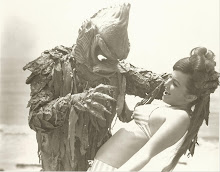
92. Zaat (Florida, 1973): A good, old-fashioned monster movie that suffered from multiple title changes and underhanded distribution.

91. Blood Sisters (New York, 1987): You can best describe Roberta Findlay's approach to horror films as "satisfyingly disinterested."

90. Zontar the Thing from Venus (Texas, 1966): Larry Buchanan's most beloved sci-fi flick was embraced by the Church of the Subgenius.

89. The Alpha Incident (Wisconsin, 1978): A talky sci-fi drama that, nonetheless, may be Bill Rebane's finest film.

88. The Dead Next Door (Ohio, 1988): The most expensive Super 8 movie ever made, probably.

87. Don't Go in the Woods (Utah, 1981): Especially if you happen to be in a wheelchair.

86. Redeemer! Son of Satan (Virginia, 1978): A confounding early slasher film with religious undertones and a freaky marionette.

85. Don't Go in the House (New York, 1979): Troubling early slasher film that in many ways serves as a precursor to the better-known Maniac.

84. I Eat Your Skin (Florida, 1964): Underrated film that lays the groundwork for a number of later Italian zombie flicks.

83. Beyond Dream's Door (Ohio, 1989): Intriguing early work from low-budget director Jay Woelfel.


82. Invasion of the Blood Farmers (New York, 1972): Don't eat before you see it, and you'll have nothing to lose!

81. The Giant Spider Invasion (Wisconsin, 1975): One big spider (and a bunch of little ones) arrive from space to eat Wisconsin.

80. Blood Stalkers (Florida, 1976): More than just a Bigfoot movie, more than just a killer hillbilly flick; the finale will leave you speechless and exhausted.

79. Chillers (West Virginia, 1988): Enjoyable horror anthology with genuine Appalachian accents on display.

78. Liquid Sky (New York, 1982): Arthouse sci-fi that features the only other film appearance of  Alice, Sweet Alice star Paula Sheppard.


77. Keep My Grave Open (Texas, 1976): A minor, but still satisfying, entry from Texas stylist S.F. Brownrigg.